What is the Difference Between Lean Body Mass and Muscle Mass?

Jump to
Editors note: This article has been re-published from an original article at InBody USA
Consider the following three statements:
- “I’m not working out to get huge; I just want to build strength and put on five pounds of lean muscle.”
- “My goal is to workout more and put on a healthy five pounds of muscle mass before next season.”
- “I’m going to add more protein to my diet and hopefully gain 5 pounds of lean body mass by the end of the month.”
In each one, someone wants to gain five pounds of something but is using three different terms. Are these three ways of saying the same thing? Can they be used interchangeably? Or are they different?
Let’s get one thing out of the way: “lean muscle” is a bit of a misnomer. Although there are indeed different types of muscle, from a biological point of view, there is no such thing as “lean muscle”. The word “lean” is usually meant to suggest the absence of body fat. But here’s the truth: all muscle is “lean muscle”.
What about Lean Body Mass and Muscle Mass? Both of these exist. However, they are two very different parts of your body composition, and in order to understand your weight, health, and fitness goals properly, you’ll need to understand the differences between them. Let’s take a look below.
Lean Body Mass Vs Muscle Mass
Lean Body Mass (also sometimes known as simply “lean mass,” likely the source of the word “lean muscle”) is the total weight of your body minus all the weight due to your fat mass.
Lean Body Mass (LBM) = Total Weight – Fat Mass
LBM includes the weight of:
- Organs
- Skin
- Bones
- Body Water
- Muscle Mass
Unlike lean muscle, Lean Body Mass correctly uses the word “lean” as it describes the entire weight of your body minus fat. This is why it is also known as “Fat-Free Mass.”
Because your Lean Body Mass comprises so many parts, any change in the weight of these areas can be recorded as changes in LBM. Keep in mind, the weight of your organs will not change much. Bone density will decrease over time, but it won’t significantly affect the weight of your LBM.
Two major areas to focus on with Lean Body Mass is body water and muscle mass.
When people talk about gaining muscle by eating more protein or muscle building workouts, what they’re really talking about is gaining or building their Skeletal Muscle Mass. This is because of the three major muscle types – cardiac, smooth, and skeletal – skeletal muscle mass is the only type of muscle that you can actively grow and develop through proper exercise and nutrition.
But Skeletal Muscle Mass is one part of your Lean Body Mass. Another major influencer is water and this can be a problem when people use muscle gain and “lean gains” interchangeably.
The Problem with “Lean Gains”
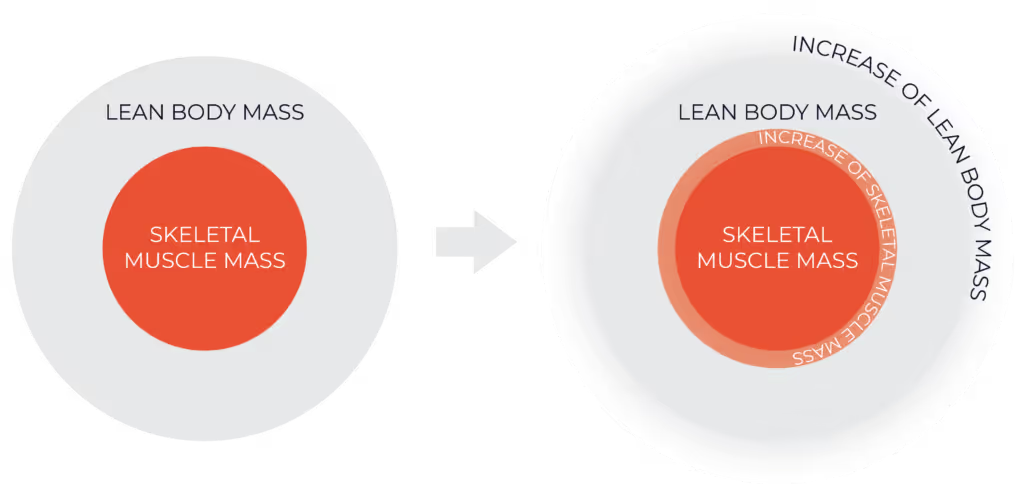
Because an increase of Skeletal Muscle Mass is an increase of Lean Body Mass, people will lump them together as “gaining lean mass” or “lean gains.”
However, it doesn’t work the other way: an increase of Lean Body Mass is not always an increase in muscle. That’s because body water makes up a significant portion of your Lean Body Mass. To illustrate this point, here’s a body composition analysis of a 174.1-pound male.
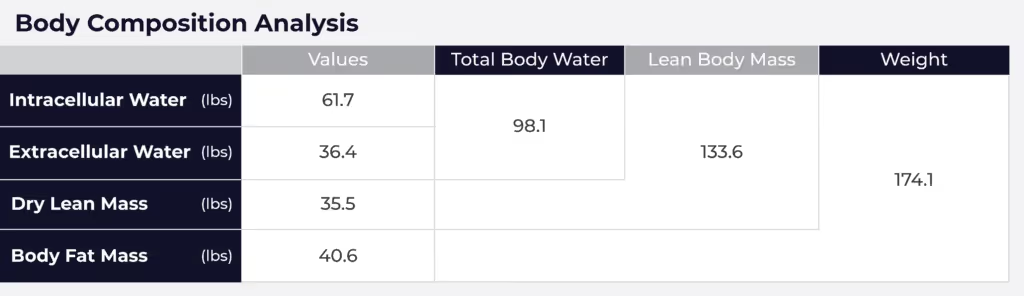
98.1 (Total Body Water) + 35.5 (Dry Lean Mass) = 133.6 Lean Body Mass
Water made up more than 70% of the total body weight, which is normal for healthy adult males.
Notice how from a body composition standpoint, Lean Body Mass is made up of three components, two of which are water. Everything else is grouped together in what’s called your “Dry Lean Mass,” which includes your bone minerals, protein content, etc.
Muscle gains definitely contribute to LBM gains, but so does water, which can fluctuate throughout the day. For instance, this means that if you were to drink a significant amount of water, enough to raise your body weight by one pound, this weight would technically be a “gain” of lean mass.
It’s also important to note that muscle itself contains water – a lot of it. According to the USGS, muscle can contain up to 79% water content. Research has also shown that resistance training promotes the increase of intracellular water in both men and women.
All of this points to two main problems when talking about “lean gains”:
- Big Lean Mass gains, when it occurs quickly, are largely increases in body water
- It’s difficult to say with any certainty how much any gain in Lean Body Mass is due to Skeletal Muscle Mass without using the right tools
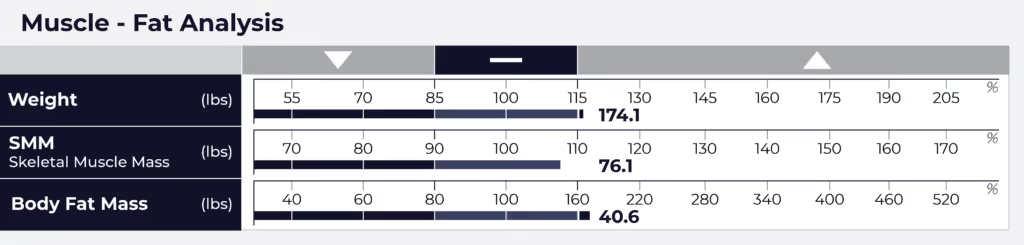
Since there’s a significant difference between Lean Body Mass and Skeletal Muscle Mass, how is it possible to know how much of each you have?
Let’s start with what not to do: do not try to use a scale to calculate changes in Skeletal Muscle Mass.
It’s a popular method to estimate muscle gain using a combination of the number on the scale and advice from fitness magazines.
The problem with using a scale to estimate progress is there are so many factors that can influence an increase in body weight, a few of which include:
- An undigested meal or drink
- Water retention due to glycogen
- Water retention due to sodium
- Body Fat gain due to being in a caloric surplus
There is only one way to calculate what is happening to your Lean Body Mass: getting your body composition analyzed. Without testing your body composition, there will be no way to know what any gain or loss in your body weight is due to.
Most methods of body composition analysis will at the minimum divide your body into Lean Body Mass (this may be referred to as Fat-Free Mass) and Fat Mass. These methods include:
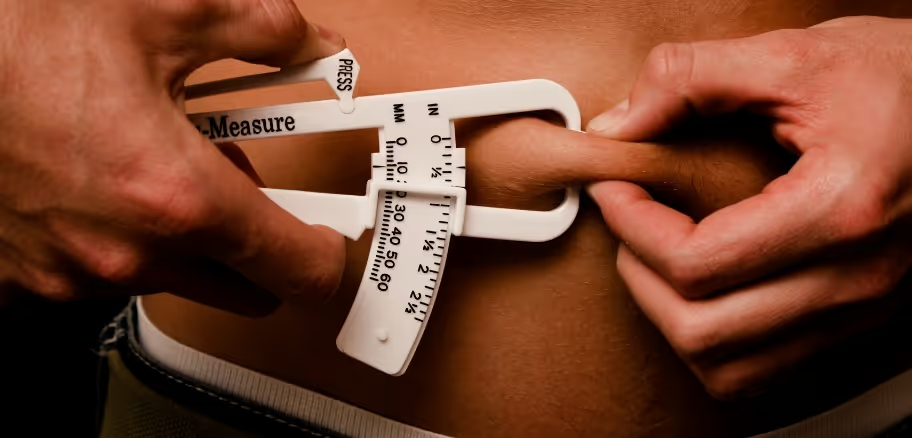
- Skinfold calipers
- Hydrostatic Weighing
- Air displacement plethysmography
Each of these has their pros and cons, and accuracy may vary depending on a number of factors unique to each testing method.
For more in-depth body composition analysis, you would need to look to two more sophisticated methods: dual-energy X-ray absorptiometry (DEXA) and Direct Segmental Multi-Frequency bioelectrical impedance analysis (DSM-BIA). Not only will these methods tell you how much fat you have, but they will differentiate your skeletal muscle mass from your lean body mass.
So, Lean Body Mass, Muscle Mass, Lean Mass, Which Is it?
Back to our originally three statements: which is correct to say? Let’s review:
- Lean Muscle: You should stop using this term because it is misleading. All muscle is “lean muscle,” and it is a confusing mix of two real terms: Skeletal Muscle Mass and Lean Body Mass.
- Muscle Mass (or Skeletal Muscle Mass): Yes, it is likely true that if you’re performing resistance training/weight lifting workouts and adding enough protein to your diet, a percentage of the change is likely due to muscle mass development. But remember that skeletal muscle mass is part of LBM. Things get tricky when you start putting numbers on your muscle mass gains. Everyone’s body composition is different, and the proportion of your skeletal muscle mass to Lean Body Mass will not be the same as someone else’s. This makes accurate estimations even harder unless you have access to sophisticated tools that can differentiate between LBM and SMM.
- Lean Mass (lean body mass): This is probably the best and safest term to use to describe your gains. When you use this term, you’re telling people that you have gained weight from muscle and water, not body fat.
However, that’s all you can really say. Because of the nature of Lean Body Mass, it is very hard to say how much of the gain is due to water and how much is due to muscle (which is largely water to begin with). A gain of 5 pounds of LBM is not 5 pounds of pure muscle,
When it comes to tracking your muscle gain (or fat loss), it all comes down to what tools you’re using to measure your progress. If all you are working with is a weight scale, then all you will ever know for sure is your weight is increasing or decreasing. It would be hard to differentiate the weight gain from water, muscle, or body fat. If you are serious about accurately measuring your muscle gain and assessing your health, go get a body composition analysis. Then – and only then – can you tell people that you gained five pounds of muscle with confidence.

Related Resources

Research Use Only Peptides: Why the FDA Is Ending the RUO Era

TB006 for Alzheimer’s: What We Know So Far About This Galectin-3 Therapy

Do I Need Liver Supplements? Here’s What to Know

How to Increase Sperm Count: 7 Ways to Boost Male Fertility

Best Nitric Oxide Foods for Better Blood Flow & Sexual Health

Thyroid Problems in Men: Symptoms to Watch For & What to Do

Vitamin B12: How Much Per Day Should You Take?

Iron Deficiency Symptoms to Watch For

Magnesium Glycinate vs. Magnesium Citrate: Which is Better?

Vitamin D3 and K2: Why You Should Take Them Together

Prebiotic vs. Probiotic Supplements for Gut Health: What’s the Difference?

Do Supplements for Muscle Building Work? What We Tell Our Patients

Insulin Resistance Symptoms (& How To Fix It)

What Is Carrageenan and Is It Dangerous?

Creatine Benefits for Men (Beyond Muscle Growth)

Melatonin for Sleeping: Why it’s Not Working & How to Fix It
Male Birth Control: What to Know About ‘The Pill’ for Men

Prostate Cancer Symptoms: What Joe Biden’s Diagnosis Means for Men Over 40

What is PEMF Therapy? Everything You Need to Know

Brain Peptides: Can They Actually Boost Cognitive Function?

TMG Supplements: Why Biohackers Can’t Get Enough

MTHFR Gene Mutation Symptoms: What Your Lab Work Isn't Telling You

The Best Health Screenings for Men (& When to Get Them)
Methylated Multivitamins: Should You Make the Switch?

Hydrogen Water: What to Know About the Biohack Gary Brecka Swears By

Telomere Testing: Can You Reverse Your Biological Age?

Men & Progesterone: Why You Should Avoid This Hormone Like the Plague
The Best Anti-Aging Supplements For Men

NAD: Side Effects & Benefits No One Is Talking About

Can Hormone Replacement Therapy Increase Cancer Risk?

Sperm Testing for Men: What to Know & Where to Go
Hormone Replacement Therapy for Men vs. Women

Low Progesterone Symptoms in Women (& What To Do About It)

Tirzepatide for Weight Loss: How Does It Work?

PT-141 for Men: Is it Better Than Viagra?
Coconut Oil as Lube: Here’s Why You Should Avoid It

Are Peptides FDA-approved?

Why You Should Reconsider Using PPI Drugs Long-Term

Statins vs. Estradiol: Which is Better for Heart Health?

Post-Finasteride Syndrome: What You Need to Know

Can Lack of Sleep Lower Testosterone?

Methylation Testing 101: Is it the Key to Healthy Aging?

Red Light Therapy for Pain Relief

What Are Food Sensitivity Tests and How Do They Work?

Insulin Resistance & PCOS Symptoms: The Labs You Should Request with Angie Nichols
How to Make Semaglutide Work Better & Faster

Creatine For Women: Here’s What To Know
6 Symptoms of Low Nitric Oxide | Symptoms To Watch For
“Am I At Risk For A Heart Attack?!” How We Screen Patients in 2024

How to Last Longer in Bed: 10 Proven Tips from Men's Health Experts

Ketamine Therapy: Are The Side Effects Worth It?

Micronutrient Testing: What Your Results Actually Mean

What is Sermorelin? Let's Talk Risks & Benefits for Men

Does A Myer's Cocktail Actually Work? Here's What We've Seen.

Male Fertility Tests | What's Next For Male Fertility?
Is A Healthy Gut the Key to Weight and Blood Sugar Control?
Is A Healthy Gut the Key to Weight and Blood Sugar Control?
Can You Actually Lower Your Cortisol Levels? | What We Know (& What To Take)

Light: The missing piece of the wellness puzzle

You Don't Need To Be Sick To Get An IV!

Endocrine Disruptors: The Frightening Truth

Nitric Oxide for Men’s Health: Insights from Dr. Nathan Bryan & Amy Stuttle
Micronutrient Testing: What You Should Know

What Is BPH? Understanding Enlarged Prostate & How to Fix It

Sex on a Screen: Free Adult Entertainment Comes with a Cost
You Are What You Eat & You Will Want to Eat More of this Fat!

Glutathione Benefits for Men: The Antioxidant You’re Probably Missing

How to Sleep Better: 7 Strategies for Deeper Sleep

Supplements for Men’s Health: Medical-Grade vs. Over-the-Counter
Why You Should Worry About The Fat You Can't See

Nitric Oxide Benefits for Men: Boost Energy, Circulation, & Sexual Health

Cortisol Levels Explained: How to Lower Cortisol for Better Health

Vitamin D for Men: Are You Getting Enough of the Sunshine Vitamin?

Understanding Human Chorionic Gonadotropin (HCG)

Sermorelin Therapy: A Smarter Approach to HGH Restoration

Tony La Russa Endorses Local Business Victory Men's Health