Why Most Testosterone Gels Don’t Work (& What Makes Transcrotal Cream Different)
Jump to
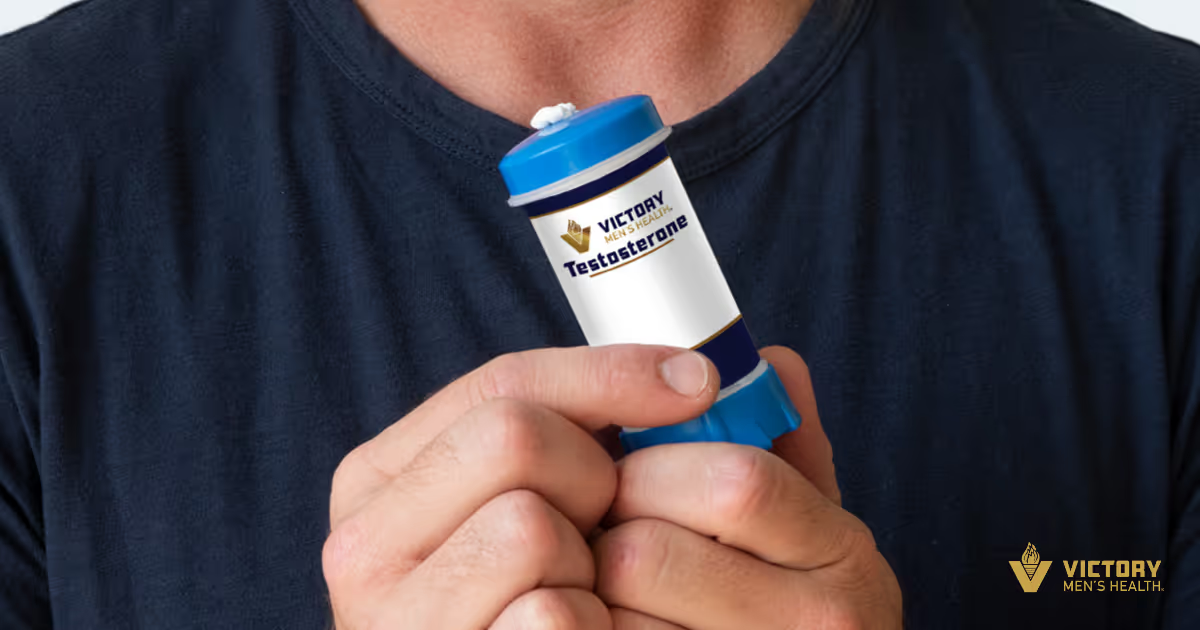
Topical testosterone (like testosterone gel or cream) is often marketed as the “easy” option for testosterone replacement therapy. No injections, no needles, just a daily application and you’re done. Sounds great, right? Unfortunately, many men walk away feeling frustrated.
They experience inconsistent results, symptoms that don’t improve, and levels that barely move. Eventually, they conclude that topical testosterone doesn’t work. In most cases, that conclusion misses the real issue.
The problem usually isn’t topical testosterone itself. It’s which topical product was used, how it was formulated, and how it was prescribed. Commercial testosterone gels and compounded testosterone creams are not the same therapy, even though they’re often lumped together.
In an episode of the Women Want Strong Men podcast, hormone expert Dave Lee breaks down why formulation, dosing, absorption, and stability matter so much with topical testosterone. You can save the full episode to dive deeper after reading.
https://open.spotify.com/episode/6dcAE6Pzw6QGTNsAOL4ueA?si=BdgNiGkhRpywKyzpigku_g
Topical Testosterone Isn’t All the Same
One of the biggest sources of confusion around topical testosterone is the language. When patients say “testosterone cream,” they’re often referring to very different products.
Broadly, topical testosterone falls into two categories:
- Commercially available testosterone gels
- Compounded testosterone creams
They behave differently in the body and produce very different results.
What Is Testosterone Gel?
Commercial testosterone gels are FDA-approved topical products commonly prescribed by primary care providers and urologists. These are the options most often covered by insurance.
They are designed to be broadly tolerated and easy to prescribe, which usually means:
- Low testosterone concentration
- Conservative dosing
- Application to large surface areas (arms, shoulders, torso)
- Standardized formulations for mass use
These products are often what men are referring to when they say topical testosterone “didn’t work.” Despite being marketed as convenient, many men find testosterone gels frustrating in real life.
Common complaints include:
- Feeling greasy or sticky after application
- Worrying about sweating the medication off
- Transfer risk to partners or children
- Daily application with little noticeable benefit
Because the doses are low and absorption is inconsistent, many men never experience meaningful symptom improvement. Over time, compliance drops because the hassle outweighs the perceived benefit. This is not a failure of testosterone as a therapy. It’s a limitation of how commercial gels are designed and prescribed.
What Is Compounded Testosterone Cream?
Compounded testosterone creams are a completely different category of therapy. These products are made by compounding pharmacies and allow for:
- Higher testosterone concentrations
- Smaller application areas
- Customized dosing based on labs and symptoms
- Cream bases designed for improved absorption
When compounded properly, testosterone creams can deliver far more consistent and effective results than commercial gels. That said, quality matters. The compounding pharmacy plays a major role in outcomes.
Consistency between batches, the stability of the formulation, and the choice of cream base all affect absorption and reliability. A poorly compounded product can lead to inconsistent dosing even if everything else is done right.
Just as important is the provider managing the therapy. Absorption varies from person to person, and dosing often needs to be adjusted over time based on follow-up labs and symptom response. Without proper monitoring, even high-quality compounded creams can fall short.
Why Commercial Testosterone Gels Often Fail
Many men come to us after using commercial gels and wonder whether topical testosterone therapy is even worth considering. We’ll tell you what we tell them: if you’re applying it daily and exactly as instructed, the problem might be the protocol itself.
Commercial testosterone gels often fail because:
- They are dosed conservatively by design.
- Absorption is inconsistent across large skin areas.
- Formulations prioritize safety and scalability over optimization.
- Daily application becomes burdensome when results are minimal.
Even when men do everything right, their testosterone levels may barely move. Symptoms like fatigue, low libido, and poor recovery remain unchanged. Over time, frustration builds and therapy is abandoned. These limitations are specific to low-potency commercial gels, not topical testosterone as a whole.
What Makes Transcrotal Testosterone Cream Different?
Among compounded testosterone creams, transcrotal application behaves differently because the skin behaves differently. The skin of the scrotum is significantly thinner and more permeable than other areas of the body. This allows testosterone to absorb far more efficiently compared to standard application sites.
Key differences of transcrotal testosterone cream include:
- Much higher absorption rates (because this area is thin and vascular)
- Smaller doses required to achieve meaningful levels
- Higher-concentration compounded formulations (often 10-20%)
- More predictable and stable testosterone delivery
Because absorption is so efficient, transcrotal cream can deliver steadier testosterone levels with less variability. Many men who failed commercial gels do very well with this approach when it’s prescribed and monitored correctly.
Who Topical Testosterone May Be Best For
Topical testosterone isn’t inherently better or worse than injections or pellets. It’s simply another tool. Like any tool, it works best when matched to the right patient and prescribed with intention.
Properly compounded topical testosterone can deliver:
- Ultra-stable testosterone levels with fewer peaks and troughs
- Needle-free therapy, which many patients prefer long term
- Minimal ingredients, using bio-identical testosterone in a hypoallergenic cream base
- A more favorable lipid response, with some patients seeing improvements in HDL cholesterol compared to injectable therapy
Because topical testosterone is absorbed gradually through the skin, it often produces steadier hormone levels throughout the day. This stability can be especially helpful for men who are sensitive to hormonal swings or who experience side effects from fluctuating testosterone levels.
That said, topical therapy still requires thoughtful dosing, high-quality compounding, and regular follow-up. When those elements are in place, topical testosterone can be a powerful and well-tolerated option for long-term hormone optimization.
Start Your Testosterone Journey the Right Way
Most testosterone gels fail not because topical therapy doesn’t work, but because they’re low-potency, inconsistently absorbed, and poorly matched to patient physiology. Many men never truly experience optimized testosterone levels while using them.
Properly compounded testosterone creams, including transcrotal formulations, are a different therapeutic tool altogether. When formulation quality, dosing, and follow-up are handled correctly, topical testosterone can be just as effective as injections for the right patient.
At Victory Men’s Health, we start with comprehensive labs to determine which delivery method makes the most sense for you. If topical therapy is appropriate, we focus on pharmacy quality, absorption, dosing, and ongoing adjustments so results improve over time.
Ready to get clarity on whether topical testosterone is right for you? Schedule a consultation with our team to review your labs and build your personalized treatment plan.

Related Resources

What Big Pharma Companies Don’t Want You To Know About TRT

FDA Testosterone Panel: Are We Finally Done With Fear-Based TRT Policy?
Oral Testosterone: How Kyzatrex Compares to Injections and Gels

HCG on TRT for Fertility: The Key to Keeping Your Options Open

Can Low Testosterone Cause Hair Loss? Here’s What to Know

TRT Risk 101: The Trouble With Using TRT as a Shortcut

12 Foods That Increase Testosterone Naturally

You Don’t Need an Aromatase Inhibitor on TRT, Here’s Why

Enclomiphene for Low Testosterone: Does It Work?

Should You Supplement with DHEA? Here’s What to Know

Zinc Benefits for Men: Testosterone, Prostate Health & More
Free vs. Total Testosterone: What to Know & Why It Matters

When to Take Magnesium Glycinate for the Best Results
At Home Testosterone Tests: Do They Really Work?

Low Testosterone Levels? Avoid These 4 Bad Habits
Testosterone Boosters for Men: What They Are & What to Know

TRT Clinic Warning Signs (& What to Look For Instead)

Is Your Testosterone Low? Why Most Doctors Aren’t Testing the Right Levels

TRT Side Effects: The Real Cause & How to Fix Them

Dopamine and Testosterone: What’s the Connection?

Testosterone FDA Update: The Truth About TRT & Heart Health

TRT & Fertility: What Our Patients Experience
TRT Dosing: How Much Testosterone Is Too Much?

High Testosterone in Women: What Causes It?

Akkermansia for Gut Health: Skip or Try?
Need-To-Know Supplements for Men on Hormone Therapy
Nitric Oxide and Erections: What’s the Link?

How Much Melatonin Should I Take?

Alcohol and Testosterone Levels: What’s the Link?

How to Boost Testosterone Naturally
The Best Peptides for Fat Loss | Results Our Clients See
Do Penis Enlargement Pills Actually Work?

How to Inject Testosterone

Is Edging Bad For Testosterone?
Do Antidepressants Lower Testosterone Levels?
Testosterone Levels: What Is The Ideal Number?

Does Metformin Lower or Increase Testosterone?

Imported item 60
TRT Options: Should I Use an Injection, Cream, or Pellets?
DHT Hair Loss: Do You Actually Lose Hair Taking Testosterone?
Testosterone Therapy Timeline: What Should You Expect?
Pregnenolone For Men | Side Effects, Results, & Where to Find It

Hormone Belly | How To Treat It Effectively & For Good!
How Long Does It Take Testosterone Replacement Therapy (TRT) To Work?

Legal Muscle: Exploring the World of Performance Enhancement with Attorney Rick Collins

Testosterone Myths and Misconceptions; BUSTED PART 2
Testosterone Boosters - Boost or Bust

Testosterone Myths and Misconceptions; BUSTED PART 3
Testosterone Myths and Misconceptions; BUSTED PART 1
Testosterone Cream for Men: Is It Better Than Injections?

Testosterone and the Everyday Athlete